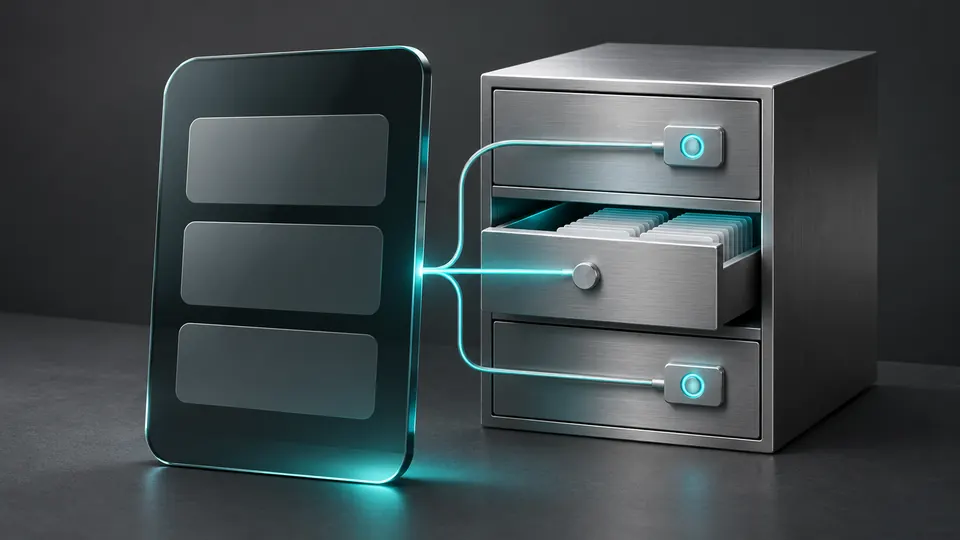
The first order appeared on screen. One question was left for later
Picture this: in a few days, an idea becomes a working system. Registration works, the dashboard looks polished and the first order appears on screen. The business owner celebrates the independence and starts entering real customer information. But one question was left for later: can one user access another user’s data? This is an illustrative situation. To understand why it deserves attention, consider a documented event: on November 5, Microsoft reported criminals using AI agents to find credentials exposed in public repositories. In one observed case, an agent moved from searching for secrets to stealing data from Azure Key Vault in five minutes. The report concerns exposed credentials and does not attribute those incidents to systems built by business owners or to Supabase. For someone who has just published an application, the practical question is different: did anyone review what became accessible along with it? A system’s appearance reveals little about what an unauthorized person can do behind the screen.
A login screen does not establish who can access each piece of information
In access-control documentation updated on November 25, Supabase explains that an exposed table without Row Level Security, or RLS, can be read and changed by roles granted those permissions. These rules can limit the records each user may access. A review needs to consider both permissions and the policies applied to the data. Supabase provides security features that need to be configured for the project. A publishable application key serves a different purpose from a secret key with administrative access; the latter must remain under server control. A finished screen does not show these decisions to the business owner. For Sync360, the concern arises when a business starts depending on a system without knowing who owns its structure and maintenance. AI can accelerate development and assist with reviews, but operations need someone who can assess the evidence, understand exceptions and take responsibility for the next steps. That responsibility remains when a business reduces or changes its IT team. Customer records, orders, documents and commercial history become part of an operation that needs to function with controlled access. A failure may require investigation, a pause in use and data recovery, while affecting the trust of the people who supplied that information.
Before entering real data, ask for answers that can be checked
Start by listing the services used, the account owners and the types of data the system stores. Request a technical review of user permissions, the database, files and credentials. Tests should use test accounts and data, including checks for whether one user can view or change another user’s records. Supabase’s production security checklist covers access rules, administrative account protection and a review of application-specific threats. Alongside those settings, define who maintains the system, how errors will be monitored and how data will be recovered if something fails. Ask for evidence that restoration works. If the system is already in use and you cannot answer these questions, arrange an assessment with your technical team and agree on measures based on the findings. Exposed secret credentials need to be revoked or replaced; deleting the published text alone is not enough. Without an internal team, seek support to gather this information before expanding usage.
Sources to check and explore
Microsoft Threat Intelligence · Threat actors use agentic AI tooling to find and abuse exposed secretsNov 5, 2026Supabase · Row Level Security · documentação atualizada / documentation updatedNov 25, 2026Supabase · Production security checklistNov 2, 2026Supabase · Understanding API keys · consulta / accessedNov 26, 2026The account of events is based on the linked sources; interpretation and suggested next steps are Sync360’s. Event, publication and revision dates are identified separately. Consult current vendor guidance when planning changes.
From information to your next step
Your system works. Shall we review what protects its data?
If you built an application with AI or took over a system without technical support, talk to Sync360. We can assess its structure, permissions and critical areas, organize priorities and define the next steps for using it in your business.
I want a technical review of my system Security
 Security
 Security